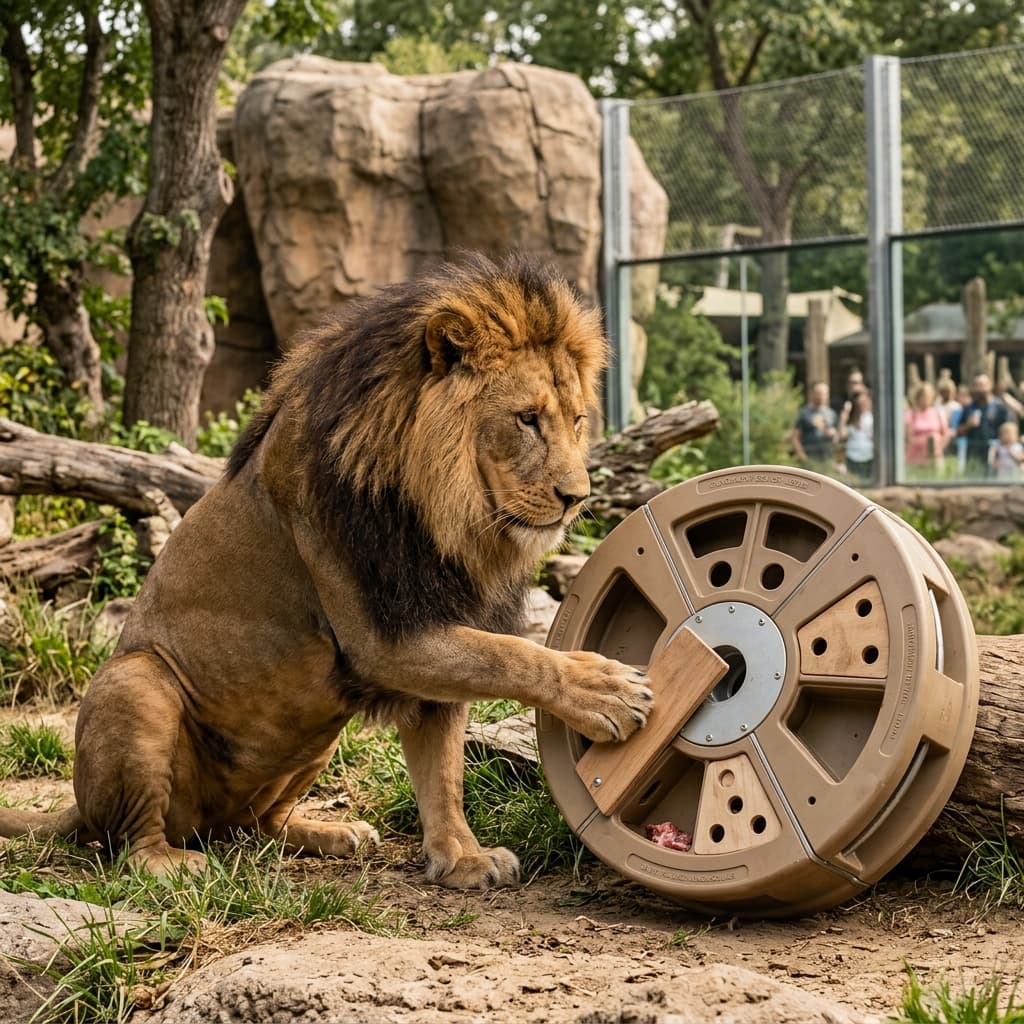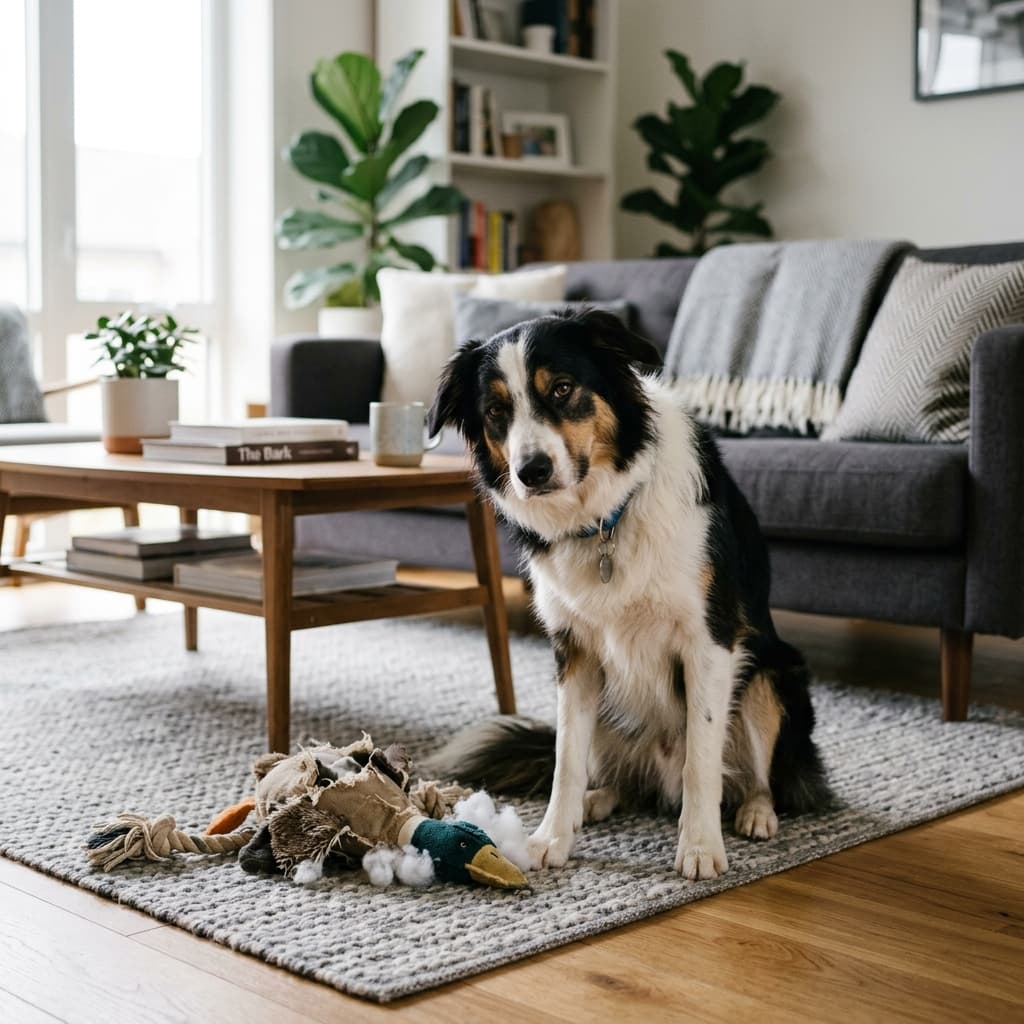
Most dog owners focus on physical exercise — walks, runs, fetch. But veterinary behaviorists consistently find that mental stimulation is equally, if not more, important for a dog's wellbeing. A physically tired dog that is mentally bored will still misbehave. Here are the five clearest signs your dog is telling you they need more mental enrichment.
Sign #1: Destructive Behavior
Chewed furniture, shredded cushions, scratched doors — destructive behavior is almost always a symptom of frustration, boredom, or excess energy with nowhere to go. Dogs are problem-solvers by nature. Without mental challenges, they create their own — usually by dismantling whatever is nearby.
This is especially common in working breeds like Border Collies, German Shepherds, and Siberian Huskies, who were bred for jobs and struggle to switch off in a domestic setting.
Sign #2: Excessive Barking or Whining
A dog that barks at everything — the postman, other dogs through the window, shadows — is often doing so out of frustration and over-arousal. Constant barking is your dog's way of saying 'I have energy and nowhere to put it.' Mental enrichment activities like nose-work can dramatically reduce this threshold within days.
Sign #3: Hyperactivity and Restlessness Indoors
“A tired dog is a good dog — but the most effective tiredness comes from the brain, not just the body. Five minutes of nose-work is equivalent to a 20-minute walk in terms of mental load.”
— Dr. Karen Overall, Veterinary Behaviorist
If your dog can't settle, paces constantly, or seems wired even after a long walk, their brain hasn't been exercised. Physical exercise releases physical energy; mental stimulation exhausts the nervous system in a different, deeper way.
Sign #4: Constant Attention-Seeking
Nudging your hand repeatedly, barking at you, jumping up when you sit down — attention-seeking behavior is a plea for engagement. Your dog isn't being 'naughty'; they're communicating that their needs aren't being met. Giving them an independent enrichment activity, like a snuffle mat, teaches them to self-entertain rather than constantly seeking human input.
Sign #5: Difficulty Settling or Sleeping During the Day
Adult dogs sleep 12–14 hours a day under normal circumstances. If your dog seems unable to relax and nap during quiet periods, it's a sign their arousal levels are too high. Mental stimulation activities before rest periods help dogs shift into a calmer state. Many owners find that a snuffle mat session before a rest time results in the dog settling for 2–3 hours afterward.
What You Can Do Right Now
- Introduce a snuffle mat as a daily mealtime activity — 10 minutes of foraging replaces a bowl in seconds
- Try scatter feeding in the garden — the same nose-work principle applied outdoors
- Add training sessions: 5 minutes of learning a new trick counts as significant mental exercise
- Rotate enrichment toys weekly so novelty keeps engagement high
- Consider nose-work classes — a structured scent sport for dogs of all ages and sizes
The good news: mental enrichment improvements show results within days. Pet owners consistently report that after just one week of daily nose-work, their dog is calmer, better behaved, and more settled at home.