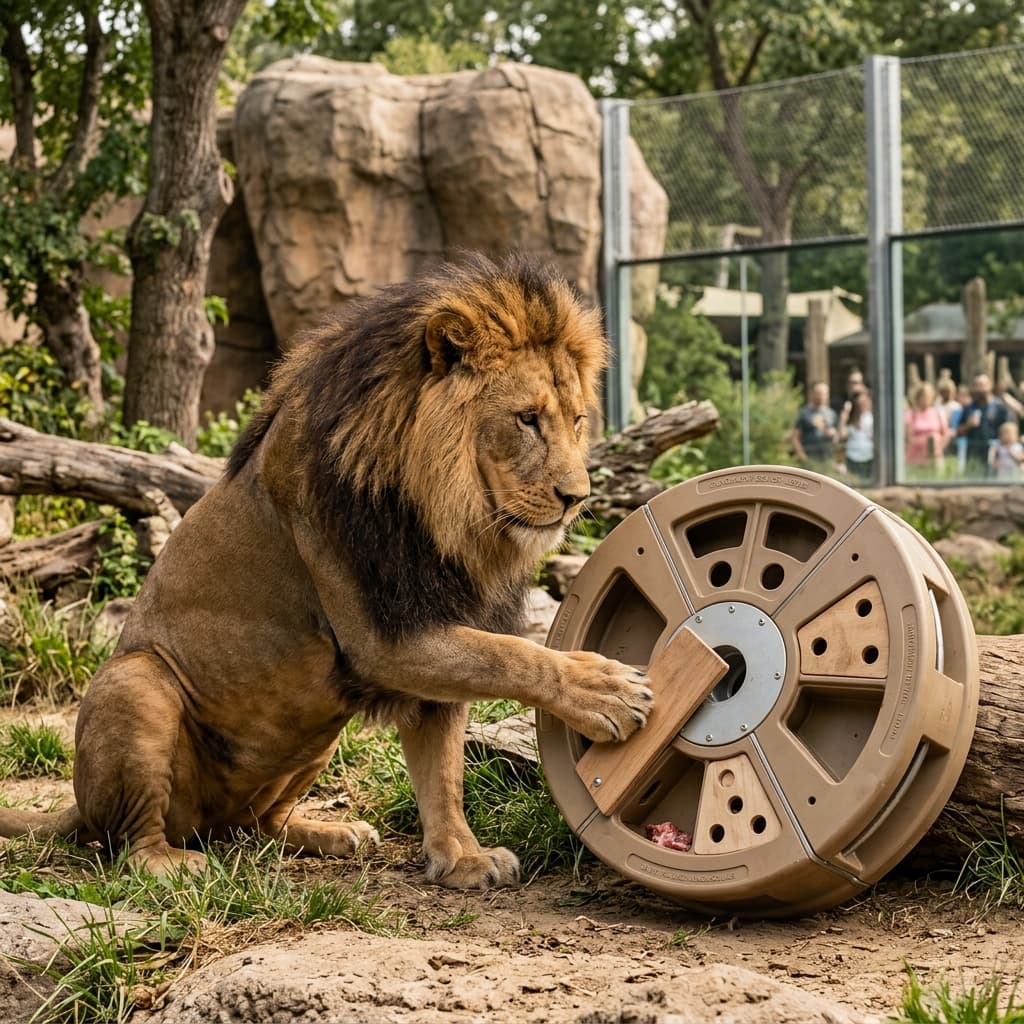
Walk through any modern, accredited zoo and you'll notice something remarkable: the animals aren't just sitting still and waiting for food. Lions are hunting for hidden meat. Primates are pulling ropes, solving puzzles, and foraging through enriched substrates. Elephants are using tree trunks filled with produce. This is behavioral enrichment — and it's the result of decades of animal welfare science.
The good news? The same principles that keep zoo animals mentally and physically healthy work identically for domestic dogs. Here's what zookeepers do, why it works, and how you can replicate it at home.
What Is Behavioral Enrichment?
“Behavioral enrichment is the practice of providing animals with stimuli that encourage the expression of species-typical behaviors. It is now considered an essential component of proper animal care in any reputable institution.”
— American Zoo and Aquarium Association
In simple terms: animals in captivity — including domestic pets — need to do the things they evolved to do. Predators need to hunt. Herbivores need to forage. Social animals need interaction. When these instinctual behaviors are suppressed or blocked, animals develop stress behaviors: pacing, self-harming, aggression, and depression.
The 5 Categories of Enrichment Zoos Use
- Foraging enrichment — hiding food to encourage natural food-seeking behavior (the most researched category)
- Sensory enrichment — novel sounds, smells, and textures to stimulate all senses
- Cognitive enrichment — puzzles, problem-solving, and tasks that require thought
- Social enrichment — interactions with same-species companions, keepers, or visitors
- Physical enrichment — objects, structures, and substrates that encourage natural movement
Foraging: The Most Important Category
In the wild, animals spend 60–80% of their waking time foraging for food. In captivity — whether a zoo or a home — that time drops to near zero when food is simply placed in a bowl. This is why foraging enrichment is consistently ranked as the highest-priority category by zoo veterinarians: it addresses the behavior that occupies the majority of an animal's cognitive energy in the wild.
For dogs, the foraging instinct is deeply embedded in their genetic makeup. Before domestication, ancestors of the domestic dog spent hours each day using their noses to find food. The modern kibble bowl eliminates that behavior entirely — in about 30 seconds.
What Zoo Enrichment Programs Have Taught Us About Dogs
- Animals with daily foraging enrichment show significantly lower baseline cortisol (the stress hormone)
- Cognitive challenges reduce stereotypic (repetitive, stress-related) behaviors within 2–3 weeks
- Nose-work specifically activates the limbic system — the brain's emotional regulation center
- Dogs that forage daily show reduced reactivity to environmental stressors
- Even 10 minutes of foraging enrichment per day produces measurable improvements in animal welfare
Bringing Zoo-Level Enrichment Home
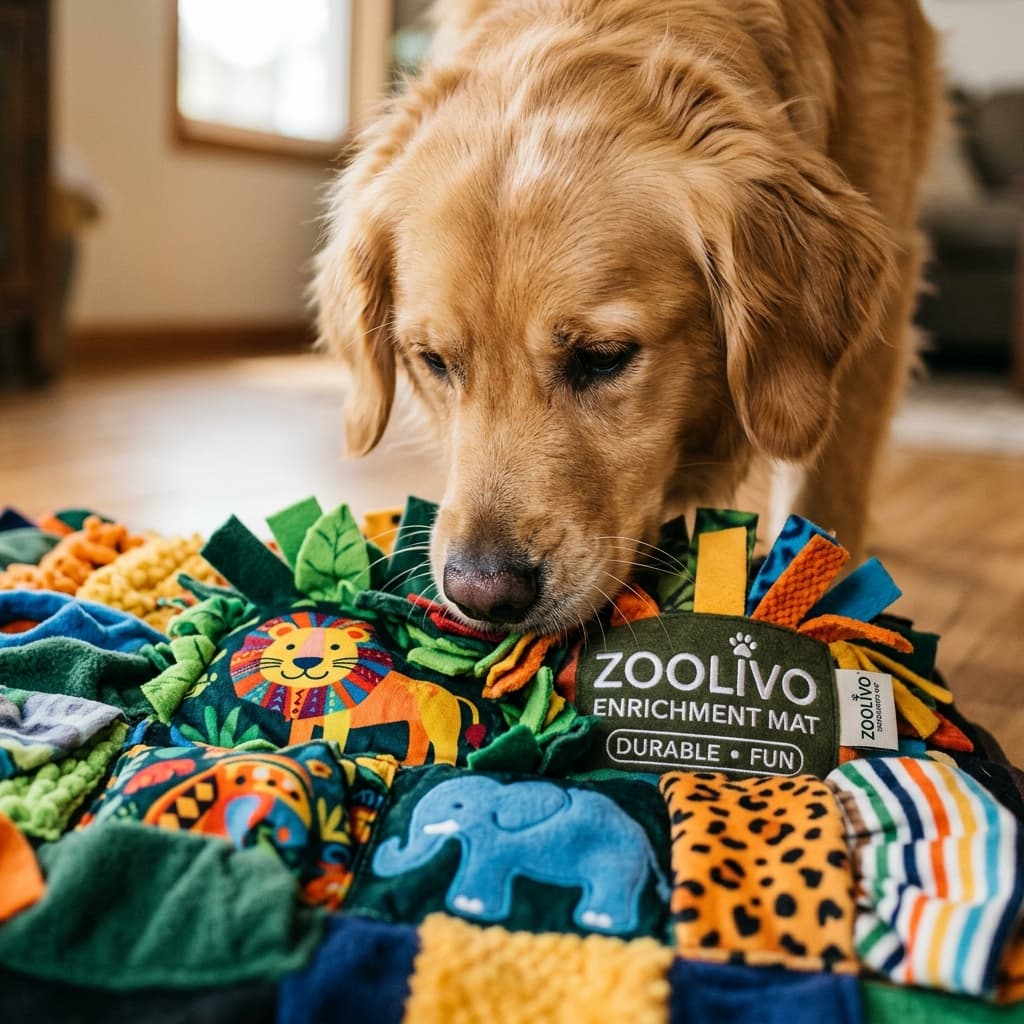
You don't need a zoo budget. The core of foraging enrichment — hiding food in a textured substrate that requires nose-work to search — can be replicated at home for the cost of a quality snuffle mat. The key is consistency: daily, structured foraging sessions that replace the passive food bowl.
- 1Replace one meal per day with snuffle mat foraging — this alone covers the most critical enrichment category
- 2Rotate scents: rub a different herb (rosemary, thyme, cinnamon) on the mat weekly to maintain novelty
- 3Add cognitive elements: scatter treats in puzzle feeders, paper bags, or cardboard boxes
- 4Encourage outdoor sniffing: let your dog lead on walks and choose where to stop and sniff
- 5Vary the challenge: alternate easy and hard days so success is always achievable but never guaranteed
The Snuffle Mat: A Zoo-Grade Solution for Home
The Zoolivo snuffle mat range was designed with this idea in mind. From the three progressively harder zones of the Avocado and Sunflower mats to the layered rings of the Rainbow mat and the tunnel pockets of the Chenille mat, each design asks your dog to search, sniff, and problem-solve — the same foraging principles zookeepers use.
Your dog deserves the same quality of mental care that a zoo provides its animals. With a snuffle mat and 10 minutes a day, you can genuinely deliver it.